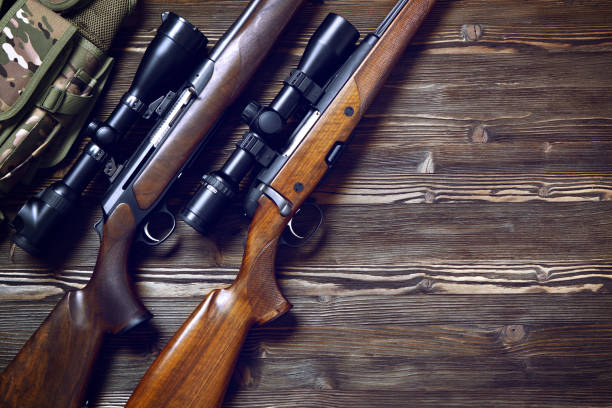
Ideal Uses for Each Type
| Rifle Type | Best Use Cases | Notable Advantages | Potential Drawbacks |
| Bolt Action | Long-range hunting (e.g., deer) | High accuracy; simple design | Slower rate of fire; manual operation |
| Semi-Auto | Short-to-medium range game (e.g., hogs) | Faster follow-up shots; versatile calibers | Heavier; slightly less pinpoint precision |
Factors Hunters Should Consider
- Hunting Environment:Open terrains favor long-range precision where bolt actions excel, while forested or brushy areas might require the faster response time provided by semi-autos.
- Personal Preference:Some hunters prefer the rugged simplicity of a bolt action rifle, while others appreciate the technological advancements found in modern semi-automatics.
By understanding these differences and weighing your priorities as a hunter, selecting between a bolt action or semi-auto rifle becomes less about technical preference and more about finding the tool best suited to your specific needs in the field.
Exploring the Mechanics of Bolt Action Rifles for Sale and Their Applications
Their design is simple yet effective, providing consistent performance for tasks that demand precision.
How Bolt Action Rifles Work
A bolt action rifle operates via a manually operated mechanism that involves opening and closing the rifle’s breech using a bolt handle. This design offers several advantages in terms of control, reliability, and ease of maintenance.
- Bolt:The primary mechanism responsible for loading and ejecting cartridges as well as cocking the firing pin.
- Receiver:Houses the bolt and provides structural support for the barrel.
- Barrel:The metal tube through which the bullet travels after being fired.
- Magazine (optional):Stores additional cartridges that can be chambered manually.
Steps to operate a bolt action rifle: 1. Lift the bolt handle to unlock the breech. 2. Pull back on the bolt to eject a spent cartridge (if applicable) and prepare for reloading. 3. Push forward on the bolt to chamber a new cartridge from either the magazine or manually load one into the chamber. 4. Lock the breech by lowering the bolt handle into position.
This manual operation contributes to their mechanical simplicity, reducing potential points of failure compared to more complex firearm mechanisms.
Advantages of Bolt Action Rifles
- Precision:The rigid structure of a locked breech enhances accuracy by minimizing movement during firing.
- Reliability:Fewer moving parts mean less likelihood of malfunctions, especially in challenging conditions such as rain or snow.
- Ease of Maintenance:Simple construction makes cleaning and repairs straightforward even in field settings.
- Caliber Options:Available in an extensive range of calibers suitable for various applications, from small game hunting to large dangerous game.
Common Applications
| Application | Description |
| Hunting | Ideal for medium-to-large game due to precision over long distances. |
| Target Shooting | Popular among competitive shooters thanks to high accuracy potential. |
| Military Use (Historically) | Widely used before semi-auto rifles became standard; still employed by snipers today. |
| Survival Situations | Reliable tool for self-reliance in wilderness or survivalist contexts. |
Why Hunters Choose Bolt Action Rifles
For hunters specifically, reliability under varying environmental conditions is crucial. Unlike semi-auto designs that may be more prone to jamming when exposed to dirt or moisture, a bolt action rifle is well-suited for rugged outdoor use. Additionally, its ability to accommodate powerful calibers gives hunters confidence when targeting large game animals such as elk or moose.
Finally, many hunters value tradition—bolt actions have been trusted companions for generations. This sense of heritage combined with modern engineering ensures their continued popularity among seasoned sportsmen.
By understanding both how these rifles function mechanically and where they perform best, you can determine whether this type aligns with your specific needs in hunting or other shooting activities.
Key Features of a Semi-Auto Rifle
- Ease of Use: The self-loading mechanism reduces the effort needed for operation, making them user-friendly even for less experienced shooters.
Performance in Hunting Scenarios
Semi-automatic rifles excel in specific hunting situations where speed and adaptability are crucial.
Dense or Brushy Terrain
In areas with significant vegetation where visibility may be limited, speed matters. A semi-auto rifle provides hunters with quicker firing capabilities should they encounter game unexpectedly at close range.
Long-Distance Shooting
Although traditionally associated with bolt-action rifles, some modern semi-autos are designed for accuracy over extended ranges when paired with high-quality barrels and optics. However, due to increased moving parts in their mechanism compared to bolt actions, achieving extreme precision can be slightly more challenging.
Advantages and Potential Drawbacks
| Advantages | Potential Drawbacks |
| Rapid follow-up shots | Can be heavier than bolt-action models |
| High magazine capacity | More complex maintenance requirements |
| Easily customizable | Slightly reduced accuracy at longer ranges |
| Effective for moving targets | Higher price point in some cases |
Choosing a Semi-Auto Rifle for Your Needs
When selecting a semi-auto rifle for hunting purposes or any other use case, consider factors like caliber compatibility (to match your intended game), ergonomics (for comfortable handling), as well as magazine capacity (important when planning extended outings).
- Research models from reputable manufacturers known for reliability.
- Test different configurations at shooting ranges before making your purchase.
By understanding these aspects of semi-auto rifle performance and their specific advantages within various contexts, you can make an informed decision tailored to your needs.
Accuracy and precision are two critical factors hunters consider when selecting a rifle. Below is a detailed comparison of these two rifle types concerning their performance in accuracy and precision.
Bolt Action Rifles: The Pinnacle of Accuracy
They are often the preferred choice for hunters who prioritize precise, long-distance shots.
- Simpler Mechanism:The manual operation of a bolt action rifle reduces the number of moving parts during firing, minimizing vibration and mechanical interference.
| Scenario | Why Bolt Action Excels |
| Open fields or plains | Precision shooting at 300+ yards |
| Big game hunting (e.g., elk) | Delivers consistent performance per shot |
Semi-Auto Rifles: Balancing Speed with Accuracy
While they may not match the raw precision of bolt actions over long distances, modern advancements in manufacturing have significantly improved their accuracy.
- Reduced Recoil Between Shots:Gas-operated systems help mitigate recoil, allowing hunters to stay more stable during rapid fire.
- Shorter Reset Time:Faster cycling between shots enables quicker target reacquisition.
- Versatility in Terrain:Semi-autos perform well in dense brush or scenarios where multiple shots may be required quickly.
| Scenario | Why Semi-Auto Excels |
| Dense woodlands | Quick reaction time on fast-moving game |
| Predator control | High capacity magazines for multiple targets |
Comparing Accuracy Metrics
While bolt actions typically offer superior precision due to their mechanical simplicity and rigidity, this does not imply that semi-autos are inherently inaccurate.
- Rifle model quality
- Caliber selection
- Ammunition type
- Shooter skill level
| Rifle Type | Effective Range | Group Size at 100 Yards (MOA) |
| Bolt Action | Up to 1000 yards | 0.5 – 1 MOA |
| Semi-Auto | Up to 600 yards | 1 – 2 MOA |
Final Considerations
- Opt for a bolt action if you require pinpoint accuracy over long distances.
Balancing these considerations alongside personal preferences will lead you toward the most effective choice tailored to your hunting objectives.
Finding Reliability: Tips for Choosing the Best Rifles Online Store
When selecting a rifle for hunting or other outdoor activities, reliability is one of the most critical factors to consider. A reliable rifle can make the difference between a successful hunt and a frustrating day in the field. Understanding what contributes to reliability and how it impacts performance can help you make an informed choice.
What Defines Rifle Reliability?
Reliability in a rifle refers to its consistent ability to perform as expected under various conditions.
- Consistent Functionality: The rifle should fire successfully every time the trigger is pulled.
- Durability: The firearm must withstand harsh environmental conditions, including rain, dirt, and extreme temperatures.
- Minimal Malfunctions: Jamming, misfires, or feeding issues should be infrequent or nonexistent.
- Ease of Maintenance: A reliable weapon should be easy to clean and maintain without requiring excessive tools or expertise.
Factors That Impact Rifle Reliability
- Their manual operation reduces the chances of mechanical failure.
- Semi-automatic rifles are more complex and may be prone to jamming if not properly maintained or if low-quality ammunition is used.
- Rifles constructed with high-quality materials like stainless steel or aircraft-grade aluminum tend to offer better durability and performance over time.
- Precision machining and attention to detail during manufacturing also play an essential role.
- Rifles designed with weatherproof coatings or synthetic stocks tend to perform better in harsh environments compared to those with untreated components.
- Using the correct caliber and high-quality ammunition reduces misfeeds and improves overall reliability.
- A properly maintained firearm is inherently more reliable than one that is neglected. Some rifles require less frequent cleaning than others due to their design.
Comparing Bolt Action vs Semi-Auto Rifles for Reliability
| Feature | Bolt Action Rifles | Semi-Auto Rifles |
| Moving Parts | Few moving parts; simple mechanism | Many moving parts; more complex |
| Susceptibility to Jamming | Rarely jams | May jam if dirty or if poor ammo is used |
| Maintenance Needs | Minimal; easier to clean | Requires regular cleaning for peak performance |
| Environmental Durability | Performs well under rugged conditions | Can struggle in extreme dirt or moisture |
Why Reliability Matters
- Confidence during critical moments when accuracy counts.
- Reduced likelihood of equipment failure when you’re far from backup resources.
- Enhanced safety by minimizing risks associated with malfunctions like accidental discharges or misfires.
Whether you’re stalking big game in challenging terrains or spending hours waiting for prey, peace of mind comes from knowing your rifle will function without fail at the moment you need it most. As you evaluate options, prioritize reliability along with factors like caliber choices, weight, and accuracy for a comprehensive decision-making process.
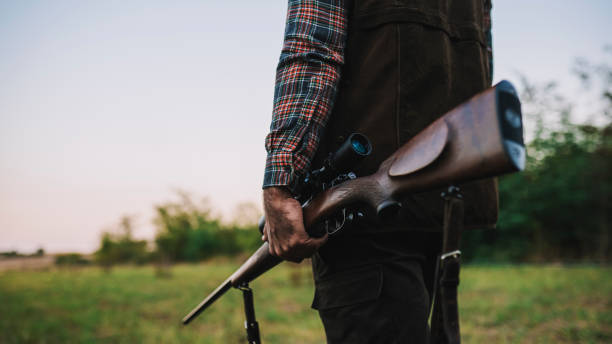
Power and Caliber Options: Selecting the Right Rifle for Your Needs
When selecting a rifle, one of the most critical decisions revolves around power and caliber. The choice of caliber directly affects a rifle’s performance, accuracy, and usability in specific situations. Whether you’re hunting big game or shooting at long range, understanding your options is key to making an informed decision.
Factors to Consider When Choosing Caliber
Selecting the right caliber involves evaluating several factors that align with your intended use.
- Game Type: The size of the animal you’re hunting plays a vital role in determining the appropriate caliber.
- Small game (e. g. , rabbits, squirrels): . 22 LR, .
- Medium game (e. g. , deer): . 243 Winchester, .
- Large game (e. g. , elk, moose): .
- Short-range shooting (<200 yards): Lower velocity calibers like . 30-30 Winchester.
- Long-range shooting (>400 yards): High-velocity calibers such as 6. 5 Creedmoor or . 308 Winchester.
- Recoil Tolerance: Larger calibers often produce more recoil.
Popular Rifle Calibers and Their Applications
| Caliber | Typical Use | Advantages | Disadvantages |
| .22 LR | Small game hunting & target practice | Low cost; minimal recoil | Limited range; not suitable for larger game |
| .243 Winchester | Medium-sized game (deer) | Accurate; moderate recoil | Limited stopping power for large animals |
| .308 Winchester | Medium to large game | Versatile; commonly available | Heavier recoil for some shooters |
| 6.5 Creedmoor | Long-range precision & medium game | High accuracy at long ranges | May be overkill for short distances |
| .300 Win Mag | Large game & long-range hunting | Exceptional power & distance | Significant recoil; higher ammunition cost |
Power vs.
While powerful calibers like the . 300 Win Mag offer undeniable stopping power, they may not always be practical depending on your needs: – For beginners or those who prioritize comfort over brute force, lighter calibers such as the . 243 Winchester may offer better usability. – On the other hand, hunters targeting dangerous or large animals must ensure their chosen cartridge delivers sufficient energy to ensure a humane kill.
Matching Rifle Type with Caliber
The type of rifle can also influence how specific calibers perform: 1.Bolt Action Rifles: Often paired with larger-caliber rounds due to their ability to handle high-pressure cartridges efficiently. 2.Semi-Auto Rifles
Balancing power and practicality ensures that you choose a rifle that suits both your technical needs and personal preferences while delivering optimal performance in the field.
Weight, Handling, and Practicality: Factors to Consider When Choosing a Rifle
When selecting a rifle, weight, handling, and practicality are key factors that can significantly affect your overall shooting experience. A rifle must not only fit the intended purpose but also be comfortable and manageable in various field conditions. Here’s an in-depth look at these considerations.
Weight
The weight of a rifle plays a crucial role in its usability. A lighter rifle is easier to carry for extended periods, especially during long hunting expeditions or rugged terrain hikes. However, lighter rifles often come with challenges such as increased recoil and reduced steadiness when aiming.
Pros of Lightweight Rifles:– Easier to carry over long distances. – Ideal for fast-paced hunting scenarios (e. g. , upland game hunting). – Quicker target acquisition due to improved maneuverability.
Cons of Lightweight Rifles:– Increased recoil may affect comfort and accuracy. – Less stable when shooting from unsupported positions.
On the other hand, heavier rifles offer stability and reduced felt recoil but can be cumbersome to transport. They are better suited for stationary or stand-based hunting situations where mobility is less of a concern.
Pros of Heavier Rifles:– Improved stability when aiming. – Often preferred for precision shooting or long-range applications.
Cons of Heavier Rifles:– Fatigue from carrying for extended periods. – Limited practicality in mobile hunting scenarios.
Handling
Rifle handling refers to how comfortably you can manipulate the firearm during use. Factors such as stock design, balance, grip texture, and length of pull all contribute to handling effectiveness. A well-balanced rifle with an ergonomic stock allows shooters to aim quickly and fire accurately under varying conditions.
Key factors influencing handling: 1.Length:Shorter rifles or carbines are easier to maneuver through dense brush or confined spaces but may sacrifice barrel length (and thus velocity).
2.Balance:Proper weight distribution ensures that the rifle feels natural when shouldered.
3.Ergonomics:Comfortable grips and adjustable features (e. g. , cheek rest or buttstock) enhance overall shooting experience.
Practicality
Practicality involves assessing whether the rifle aligns with your specific needs in terms of portability, maintenance requirements, accessories compatibility, and intended purpose.
- Portability:If you often hunt on foot across diverse terrains, opt for a lightweight setup with a durable sling attachment system.
- Durability:Look for weather-resistant finishes like synthetic stocks or corrosion-resistant coatings if you’ll encounter harsh environments.
- Scoped vs Iron Sights:Depending on your target range, practicality might mean selecting a model designed for easy scope mounting or one optimized for quick iron sight usage.
- Accessory Compatibility:Ensure availability of aftermarket components such as bipods, slings, or optics mounts tailored to your needs.
| Rifle Feature | Best Use Case | Additional Notes |
| Lightweight Rifle | Long treks through rugged terrain | Focuses on ease of carrying |
| Heavyweight Rifle | Precision-focused stand hunting | Prioritizes accuracy over portability |
| Adjustable Stock | Multi-user adaptability | Ideal if multiple shooters will use it |
| Corrosion-resistant finish | Wet/humid environments | Protects against rust over prolonged usage |
By carefully evaluating weight considerations alongside handling characteristics and practical features suited to your specific requirements, you can select a rifle that enhances both performance and comfort in real-world conditions while ensuring reliability throughout its lifetime usage span.
- Bolt-Action vs Semi-Auto Rifles: A Comprehensive Guide to Buy Rifles Online
- How to Buy Rifles Online and Choose the Best Semi-Auto for Field Performance
- Where to Buy Rifles Online: The Best Picks for 2025
- A Complete Guide to Choosing Beginner Rifles from an Online Store
- Comparing Bolt-Action and Semi-Auto Rifles for Sale: Precision and Performance Insights
- Exploring the Best Bolt Action and Semi-Automatic Rifles for Sale
- Bolt-Action vs. Semi-Auto Rifles for Sale: A Comprehensive Comparison of Pros and Cons
- Where to Buy Rifles Online: Comparing Bolt-Action and Semi-Auto Options for Precision Shooting
