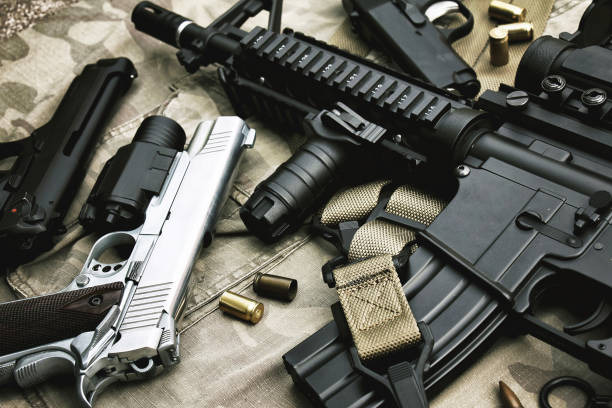
When selecting a rifle, understanding the key differences between bolt action and semi-automatic designs is crucial. These two types of rifles serve distinct purposes and cater to different user preferences, making it essential to evaluate their features, performance, and suitability for various scenarios.
Bolt Action Rifles
- Mechanical Simplicity: Fewer moving parts result in easier maintenance and improved durability.
- Accuracy: The stable design provides exceptional precision, making them ideal for long-distance shooting.
- Caliber Variety: Available in a wide range of calibers suited for hunting, target shooting, and tactical applications.
- Slower Rate of Fire: Since each round must be chambered manually, firing rate is significantly reduced compared to semi-automatic rifles.
Bolt action rifles are widely used in hunting because they allow accurate placement of shots over long distances. Hunters often prefer this type due to its dependability in harsh environmental conditions.
Semi-Automatic Rifles
- Faster Rate of Fire: Enables quicker follow-up shots compared to bolt action firearms.
- Ease of Use: Does not require manual operation after each shot—ideal for beginners or those requiring rapid engagement.
- Versatility: Often designed with modular components that allow customization (e.g., optics or grips).
- Slightly Less Precision: While still accurate, semi-autos may not match the pinpoint precision of bolt actions due to slight mechanical variances.
Semi-automatics are commonly favored in tactical scenarios and competitive shooting events where speed is paramount. They also appeal to recreational shooters who value convenience.
Comparing Bolt Action vs. Semi-Automatic
| Feature | Bolt Action | Semi-Automatic |
| Rate of Fire | Slower (manually operated) | Faster (self-loading mechanism) |
| Accuracy | Superior for long-range precision | Slightly less precise overall |
| Reliability | Extremely reliable under harsh conditions | Generally reliable but prone to malfunctions if not maintained |
| Maintenance Complexity | Easy | Moderate |
| Use Case | Hunting, sniping | Tactical scenarios, competitive shooting |
Choosing Based on Application
- Opt for a bolt action rifle if precision over long ranges is critical.
- A semi-automatic rifle may be better suited due to its speed and ease of handling during high-pressure situations.
- Both options can work well depending on personal preference; however, semi-autos offer more flexibility with rapid firing.
Understanding these distinctions allows prospective buyers to make informed decisions based on their unique requirements while appreciating the strengths each design brings to the table.
A Comprehensive Guide to Buy Rifles Online and Understand How They Work
Rifles are precision-engineered firearms designed for accuracy and versatility. To understand their mechanics, it’s important to break them down into their core components and functions. Here’s a detailed look at how rifles operate and the principles that govern their performance.
Core Components of a Rifle
- A long metal tube through which the bullet travels.
- Features rifling grooves that impart spin to the bullet for increased accuracy.
- Houses the mechanism that loads, fires, and ejects cartridges.
- Can be categorized into different types such as bolt action, lever action, pump action, or semi-automatic.
- The part held by the shooter to stabilize the rifle.
- Often made of wood, synthetic materials, or laminate for durability.
- The trigger initiates the firing sequence.
- Includes safety mechanisms to prevent accidental discharge.
- Stores ammunition and feeds it into the chamber via the action.
- Allow shooters to aim accurately at targets.
- May include iron sights, telescopic sights (scopes), or red-dot optics.
Key Mechanisms in Rifle Operation
- Loading
Cartridges are manually placed into the magazine or chamber depending on the type of rifle. - Chambering
In bolt-action rifles, this involves manually cycling a round from the magazine into the chamber using a bolt handle. In semi-automatics, this process is automatic upon pulling back and releasing the charging handle. - Firing
Pulling the trigger releases a firing pin or striker that strikes a primer on the cartridge base. This ignites gunpowder inside the cartridge casing. - Bullet Propulsion
The rapid expansion of gases from burning gunpowder propels the bullet forward through the barrel at high velocity while imparting spin due to rifling grooves. - Extraction & Ejection
After firing, spent casings are removed (extracted) from the chamber and ejected out of a port via mechanical means such as springs or gas systems in automatic models. - Reset & Reloading
Semi-automatic rifles automatically reset their mechanisms for subsequent shots by utilizing gas pressure or recoil energy to cycle new rounds from magazines.
Table: Manual vs Automatic Cycling
| Feature | Bolt Action | Semi-Automatic |
| Cycling Method | Manual (via bolt handle) | Automatic (gas/recoil-driven) |
| Rate of Fire | Slower | Faster |
| Maintenance Complexity | Lower | Higher |
| Ammunition Efficiency | High | Medium |
Advantages of Rifled Barrels
- Increased Accuracy: The spin stabilizes bullets during flight.
- Extended Range: Enhanced stability allows bullets to travel farther without significant deviation.
- Consistent Performance: Repeated shots exhibit predictable trajectories under similar conditions.
Understanding these mechanics allows users to better appreciate how rifles deliver precision and power consistently across various applications like hunting, target shooting, and tactical scenarios while highlighting differences between manual models like bolt-action rifles versus semi-automatics that rely on automation for speed and convenience. Proper maintenance further ensures reliability across all mechanical components over time.
Understanding Recoil and Accuracy When Shopping at a Rifles Online Store
Recoil plays a significant role in how a rifle performs and how accurately it can be fired. Understanding the mechanics of recoil, its effect on shooting accuracy, and ways to mitigate it is essential for both novice and experienced shooters.
What Is Recoil?
Recoil, often referred to as “kick,” is the backward force generated when a rifle is discharged. According to Newton’s Third Law of Motion, every action has an equal and opposite reaction. When a bullet is fired, the pressure that propels the bullet forward also pushes the rifle backward into the shooter’s shoulder.
The amount of recoil experienced depends on several factors: – Rifle Caliber: Larger calibers produce higher recoil due to increased energy required to propel heavier projectiles. – Rifle Weight: Lighter rifles tend to generate more felt recoil as there is less mass to absorb energy. – Ammunition Load: High-powered cartridges result in stronger recoil forces. – Stock Design and Fit: Poorly designed or ill-fitting stocks may amplify perceived recoil.
Effects of Recoil on Accuracy
Excessive or poorly managed recoil can significantly impact shooting accuracy in several ways: 1. Shooter Anticipation: Many shooters unconsciously flinch or tense up before pulling the trigger, anticipating the impact of recoil. This movement can result in shots being off-target. 2. Follow-Up Shots: In rapid-fire or semi-automatic scenarios, heavy recoil disrupts sight alignment, making accurate follow-up shots more challenging. 3. Fatigue Over Time: Prolonged shooting sessions with high-recoil rifles can cause shoulder fatigue or discomfort, leading to diminished accuracy over time.
How to Reduce Recoil
- Use a Muzzle Brake or Compensator – These devices redirect gasses expelled from the barrel after firing, counteracting rearward force. – Pros: Effective at reducing felt recoil and muzzle rise. – Cons: Increased noise levels for nearby shooters.
- Opt for a Heavier Rifle – Additional weight in a rifle helps absorb some of the energy produced during firing. – This approach is particularly effective for target shooting but may not be ideal for hunting due to reduced portability.
- Select Low-Recoil Ammunition – Reduced-recoil loads are available for many calibers, offering sufficient performance without excessive kick.
- Install a Recoil Pad – A padded buttstock cushion can effectively reduce impact on your shoulder. – Common materials include rubber or gel inserts that absorb shock.
- Practice Proper Shooting Technique – Ensure your stance is stable with feet shoulder-width apart. – Pull the rifle snugly into your shoulder pocket before firing; this reduces perceived impact by dispersing force across your body.
Table: Comparison of Calibers by Felt Recoil
| Caliber | Felt Recoil (ft-lbs) | Typical Applications |
| .22 LR | 0 | Target shooting / Small game |
| .223 Remington | ~3 | Varmint hunting / Home defense |
| .308 Winchester | ~15 | Big game hunting / Long-range use |
| .300 Win Mag | ~30 | Large game hunting |
Final Thoughts on Managing Recoil
Effectively managing recoil ensures better control over your firearm and allows you to focus on precision rather than discomfort or distraction. By combining proper equipment choices with sound technique, shooters can mitigate its effects—resulting in improved overall performance and accuracy during any type of firearm activity.
Common Rifle Malfunctions and How to Address Them Effectively
Rifles, like any mechanical device, are prone to occasional malfunctions. Understanding the most common issues and knowing how to address them can help ensure reliability and prolong the life of your firearm. Below, we’ll explore frequent rifle malfunctions, their causes, and effective methods for resolving them.
1. Failure to Feed
A failure to feed occurs when a cartridge does not properly enter the chamber during cycling.
Causes: – Dirty or damaged magazine
– Weak magazine spring
– Improper ammunition dimensions
– Excessive fouling or debris in the action
Solutions: – Inspect and clean your magazines regularly. Replace any that show signs of damage or wear. – Use high-quality ammunition that adheres to standard specifications. – Clean the rifle’s action thoroughly to remove fouling or debris. – Consider replacing worn-out magazine springs.
2. Failure to Fire
This malfunction happens when the trigger is pulled, but the cartridge fails to ignite.
Causes: – Faulty primer on the cartridge
– Firing pin issues (e.g., broken or obstructed)
– Insufficient firing pin strike due to weak hammer spring
Solutions: – Check for proper primer placement and use reliable ammunition brands. Avoid old or poorly stored ammo. – Disassemble and inspect the bolt assembly for firing pin damage or obstructions. – If necessary, replace weak hammer springs with factory-recommended parts.
3. Failure to Eject (“Stovepipe”)
A failure to eject occurs when an empty casing becomes stuck in the ejection port instead of being cleanly expelled.
Causes: – Worn-out extractor claw
– Weak ejector spring
– Improper lubrication in cycling components
Solutions: – Inspect and replace worn extractor components as needed. – Ensure proper lubrication of moving parts using firearm-specific lubricants. – Test different types of ammunition if ejection problems persist.
4. Bolt Not Closing Completely
This issue arises when the bolt does not lock fully into place, preventing proper chambering of a round.
Causes: – Dirty chamber causing friction
– Damaged bolt lugs or debris interfering with locking surfaces
– Overly tight tolerances due to improper barrel seating
Solutions: | Step | Action Required | |———-|——————–| | Clean | Thoroughly clean both the chamber and locking lug areas using appropriate tools. | | Inspect | Examine bolt lugs for any signs of wear or damage; repair if necessary. | | Verify Fit | Confirm proper alignment between barrel extension and chamber area during assembly.|
Preventative Maintenance Tips
- Regularly clean your barrel, action, magazine well, and other critical areas after each use.
- Check wear-prone parts such as extractors, springs, and firing pins periodically.
- Store firearms in a dry environment with controlled humidity levels to prevent rusting.
By addressing these malfunctions proactively through maintenance practices and timely repairs, you can maximize both reliability and accuracy while ensuring safe operation under various conditions.
The Role of Cartridges in Rifle Performance and Versatility
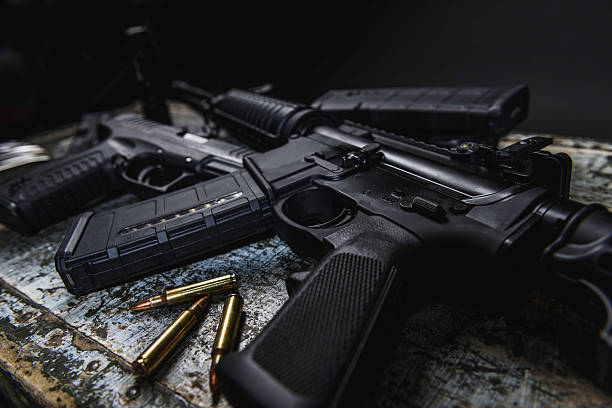
Cartridges are an essential component of rifle performance as they directly impact the firearm’s accuracy, power, recoil, and overall versatility. Understanding the role cartridges play is vital for selecting a rifle suited to your needs—whether for hunting, target shooting, or tactical applications.
Components of a Cartridge
- Case: Usually made from brass, steel, or aluminum, the case holds all other components together.
- Primer: This small component ignites the powder when struck by the firing pin.
- Propellant (Gunpowder): The energy source that creates expanding gases to propel the bullet forward.
- Projectile (Bullet): The portion that leaves the barrel and impacts the target.
Cartridge Caliber and Rifle Compatibility
| Caliber | Typical Use Cases | Notable Examples |
| .22 LR | Small game hunting, target shooting | Ruger 10/22 |
| .223 Remington | Varied uses including varmint hunting | AR-15 platforms |
| .308 Winchester | Big game hunting, precision shooting | Bolt-action rifles like Remington 700 |
| 6.5mm Creedmoor | Long-range shooting | Precision rifles |
How Cartridges Influence Performance
- Accuracy
The bullet’s weight and shape affect its trajectory and stability in flight. For instance: - Lighter bullets typically have flatter trajectories but are more susceptible to wind drift.
- Heavier bullets maintain momentum better at longer ranges.
- Recoil
The amount of gunpowder and bullet weight significantly influence recoil: - Low-recoil cartridges like .223 Remington are ideal for beginners or high-volume shooters.
- Higher-recoil options such as .300 Winchester Magnum deliver greater power but require more skill to control effectively.
- Power and Penetration
Cartridges designed with high powder charges and heavier bullets provide increased energy transfer upon impact, making them suitable for large game or defensive scenarios. - Versatility
Some cartridges are highly versatile due to their balanced characteristics: - The .308 Winchester is widely used across hunting, competition shooting, and military applications.
- The 6.5mm Creedmoor excels in long-range precision without excessive recoil.
Matching Cartridges with Scenarios
- Hunting: Larger calibers like .30-06 Springfield provide sufficient stopping power for big game such as deer or elk.
- Target Shooting: Small calibers like .22 LR offer affordability, low recoil, and precise accuracy at shorter ranges.
- Long Range Shooting: High ballistic coefficient options like 6.5mm Creedmoor excel at maintaining accuracy over extended distances.
Selecting the appropriate cartridge ensures optimal performance from your rifle based on your specific needs. By understanding how each component works together within a cartridge system, you can make informed decisions tailored to various scenarios while maximizing both efficiency and safety during use.
Comparing the Performance of Bolt-Action and Semi-Automatic Rifles in Various Scenarios
Understanding the performance of bolt-action and semi-automatic rifles across different scenarios is essential for shooters, hunters, and enthusiasts alike. Each rifle type offers distinct advantages and disadvantages based on its design, mechanics, and intended purpose. Below is a comparison of how these two types perform in various contexts.
Hunting Applications
Bolt-Action Rifles: – Known for their accuracy and precision, especially at long ranges. – Ideal for hunting larger game where a single accurate shot is critical. – Simpler mechanisms make them highly reliable in outdoor conditions like rain or dust. – Tend to use larger calibers suitable for taking down big game animals.
Semi-Automatic Rifles: – Offer faster follow-up shots, which can be advantageous when hunting smaller or faster-moving animals. – Generally preferred for varmint hunting due to their rapid-fire capability. – Slightly less accuracy at extended ranges compared to bolt-action rifles but still effective within moderate distances.
Tactical Use
Bolt-Action Rifles: – Commonly employed by military snipers due to their unmatched precision over long distances. – The manual cycling of the action ensures consistency in shot placement without interference from auto-loading mechanisms.
Semi-Automatic Rifles: – Favored by law enforcement and military units requiring rapid engagement with multiple targets. – Faster cycling allows for a higher rate of fire, offering an advantage in dynamic or close-quarter scenarios.
| Feature | Bolt Action Rifle | Semi-Automatic Rifle |
| Rate of Fire | Slow (requires manual operation) | Fast (semi-auto mechanism) |
| Accuracy | Extremely accurate at long ranges | Moderate to high accuracy |
| Reliability | High reliability in harsh conditions | May require more maintenance |
Competition Shooting
Bolt-Action Rifles: – Frequently used in precision shooting competitions where exact placement matters most.
– Shooters value the consistent trigger pull and absence of recoil-operated cycling mechanisms that could affect stability.
Semi-Automatic Rifles: – More suited for timed competitions requiring swift target engagement at varying ranges. – The ability to quickly fire follow-up shots provides a tactical edge in multi-target scenarios.
Recreational Use
- Bolt Action: Appeals to those who enjoy deliberate shooting with an emphasis on technique and precision.
- Semi-Auto: Popular among enthusiasts who value speed and versatility while engaging targets recreationally.
Key Takeaways
While bolt-action rifles excel in terms of accuracy, reliability, and effectiveness over long distances, semi-autos shine when speed and volume are required. Choosing between these two options ultimately depends on your specific needs—whether it’s precision-based tasks like hunting large game or rapid engagements during tactical exercises.
Key Features to Consider When Choosing Between Bolt Action and Semi-Automatic Rifles
Selecting the right rifle involves understanding how its design, functionality, and features align with your intended use. Whether you’re a hunter, a competitive shooter, or someone interested in self-defense, bolt-action and semi-automatic rifles each have distinctive features that cater to specific needs. Below are some key factors to consider when choosing between these two types of firearms.
Accuracy
- Bolt Action: Known for their precision, bolt-action rifles are often the weapon of choice for long-range shooting and hunting. The manual operation of the bolt reduces mechanical movement during firing, which can contribute to greater accuracy.
- Semi-Automatic: While semi-automatic rifles are accurate at shorter distances, their design typically introduces more recoil and vibration due to the cycling action. This can slightly impact precision at extreme ranges.
Rate of Fire
- Bolt Action: With a manually-operated mechanism, bolt-action rifles require the shooter to work the bolt after each shot. This slows down the rate of fire but ensures controlled shooting.
- Semi-Automatic: Semi-automatics offer faster follow-up shots because they automatically cycle after each round is fired. This feature is advantageous in scenarios where speed is critical.
Weight and Portability
- Bolt-action rifles tend to be lighter due to their simpler mechanisms and fewer moving parts.
- Example: A lightweight bolt-action rifle is ideal for backcountry hunting trips where carrying extra weight is burdensome.
- Semi-automatic rifles often weigh more because of their gas or recoil-operated systems, as well as larger magazines.
| Feature | Bolt Action | Semi-Automatic |
| Weight | Lighter | Heavier |
| Portability | Easier | May require more effort |
Maintenance Requirements
- Bolt Action: These rifles have a straightforward design that makes cleaning and maintenance relatively simple.
- Semi-Automatic: The added complexity in semi-autos demands more frequent cleaning due to carbon buildup from rapid cycling.
Ammunition Capacity
Semi-auto rifles generally have larger magazine capacities compared to bolt actions: – Bolt Action: Typically holds between three to five rounds. – Semi-Automatic: Can hold anywhere from ten rounds up to thirty (or more) depending on magazine size.
Cost Considerations
Bolt-action rifles are generally less expensive than high-quality semi-auto models due to simpler construction: – If budget constraints exist but accuracy remains a priority, a bolt action may be the better choice. – For those who prioritize versatility over cost efficiency, investing in a reliable semi-auto may be worth it.
Choosing between a bolt-action or semi-automatic rifle ultimately boils down to balancing key features such as accuracy requirements, rate of fire, ease of portability, ammunition capacity needs, maintenance preferences, and budget constraints with your specific purpose for owning the firearm. Each type has distinct advantages that make them suitable for different scenarios—from hunting expeditions requiring pinpoint precision at distance (bolt action) to tactical or defensive scenarios demanding rapid follow-up shots (semi-auto). Evaluate these aspects carefully before making your decision.
- Bolt-Action vs Semi-Auto Rifles: A Comprehensive Guide to Buy Rifles Online
- How to Buy Rifles Online and Choose the Best Semi-Auto for Field Performance
- Where to Buy Rifles Online: The Best Picks for 2025
- A Complete Guide to Choosing Beginner Rifles from an Online Store
- Comparing Bolt-Action and Semi-Auto Rifles for Sale: Precision and Performance Insights
- Exploring the Best Bolt Action and Semi-Automatic Rifles for Sale
- Bolt-Action vs. Semi-Auto Rifles for Sale: A Comprehensive Comparison of Pros and Cons
- Where to Buy Rifles Online: Comparing Bolt-Action and Semi-Auto Options for Precision Shooting
